
When a loved one is diagnosed with Alzheimer’s disease or another form of dementia, families face difficult decisions about care. One option you’ll likely encounter is memory care—but what exactly does it involve, and how do you know if it’s the right choice?
This guide breaks down everything you need to know about memory care, from services and costs to recognizing when it’s time to make the move.
What Is Memory Care?
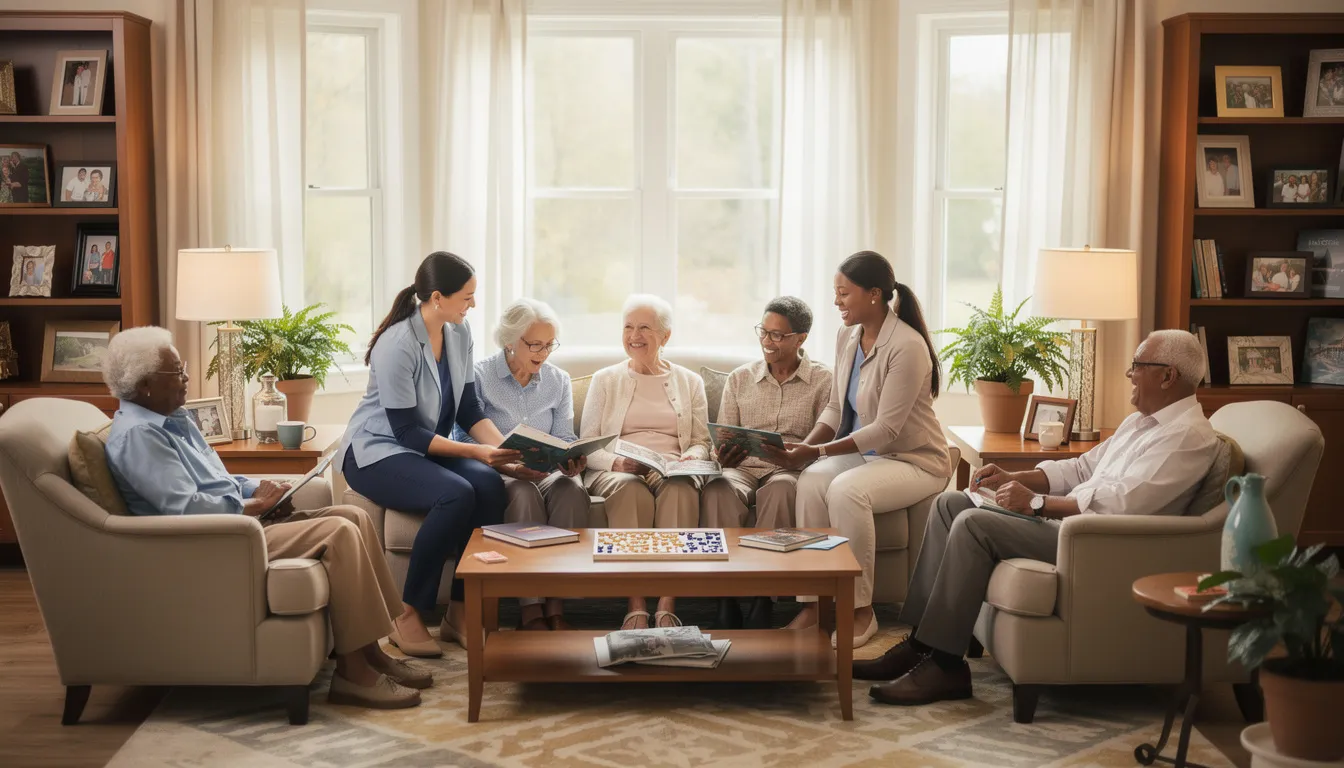
Memory care is a specialized type of senior living designed specifically for people living with Alzheimer’s disease, dementia, and other cognitive impairments. These memory care facilities provide 24/7 supervision, structured routines, and a secure environment tailored to the unique challenges of memory loss.
Unlike standard assisted living, memory care communities maintain higher staff-to-resident ratios and employ trained caregivers who receive specialized training in dementia communication, behavioral management, and de-escalation techniques. The physical environment itself is designed as a therapeutic tool—secured entrances and exits prevent wandering, while calming layouts and sensory stimulation tools reduce confusion and agitation.
While nursing homes focus primarily on complex medical needs and rehabilitation, memory care centers its approach on cognitive support and safety. Residents receive personalized dementia care that goes beyond basic personal care to include memory-enhancing activities, structured daily life routines, and a supportive environment that preserves dignity.
Key features of memory care include:
- Round-the-clock supervision by staff members with dementia-specific expertise
- Secured entrances, exits, and outdoor spaces to prevent unsafe wandering
- Individualized care plans addressing each resident’s cognitive ability and personal needs
- Structured daily routines designed to minimize confusion and lower stress
- Assistance with personal care tasks like bathing, dressing, and grooming
- Medication management with careful monitoring
What memory care provides that standard senior living doesn’t:
- Staff trained specifically in dementia communication and behavioral responses
- Environmental design features that support wayfinding and reduce disorientation
- Specialized activities targeting cognitive function and brain health
- Lower resident-to-staff ratios for more attentive care
- Safety features throughout the physical environment to prevent accidents
Who Is Memory Care For?
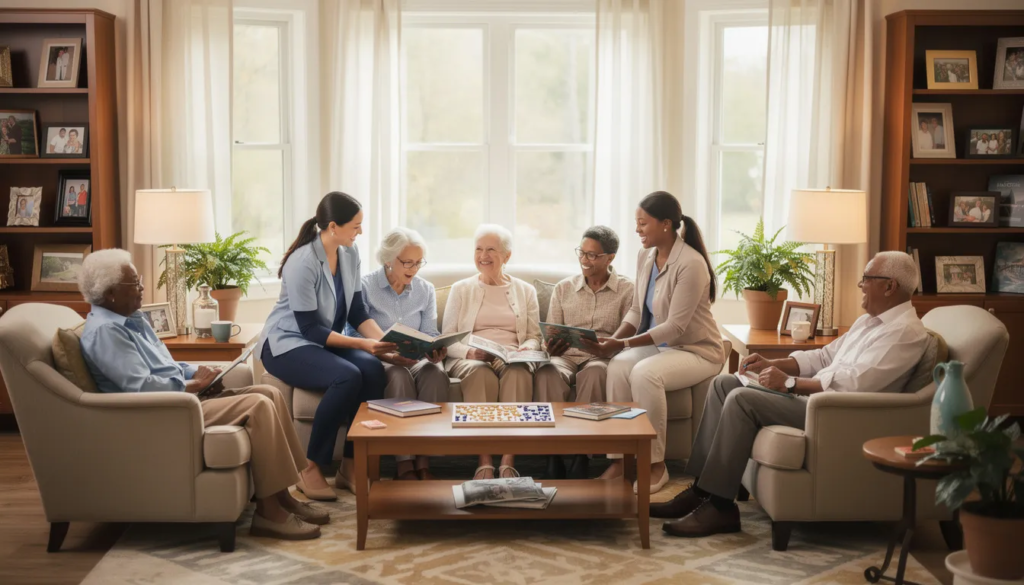
Memory care is designed for older adults living with Alzheimer’s disease, vascular dementia, Lewy body dementia, frontotemporal dementia, or mixed dementia who can no longer be safely supported at home or in standard assisted living communities.
Common signs that a person may need memory care:
- Frequent wandering or exit-seeking behavior, especially at night
- Getting lost in familiar places, including their own home
- Increasing agitation, aggression, or behavioral changes
- Forgetting to eat, drink water, or take medications
- Unsafe behaviors like leaving stoves on or doors unlocked
- Inability to recognize family members or close friends
- Requiring assistance with most activities of daily living
- Falls or accidents becoming more frequent
Most memory care residents are in their late 70s to mid-80s, though some memory care communities also support people with early-onset dementia under age 65. The decision to transition typically follows a formal diagnosis by a neurologist, geriatrician, or primary care physician who can assess whether 24-hour memory care has become necessary.
Many families find that the tipping point isn’t a specific disease stage but rather the moment when symptoms begin to compromise safety, independence, or quality of life for both the person with dementia and their caregivers.
What Services and Features Does Memory Care Include?
Memory care communities combine housing, personal care, supervision, and dementia-specific programs in one integrated setting. Rather than piecing together separate services, families can rely on a single community to address their loved one’s evolving needs.
Care and Support Services:
- 24/7 supervision and monitoring by healthcare professionals
- Assistance with activities of daily living (ADLs) including bathing, dressing, toileting, and mobility
- Medication management with proper dosing and timing
- Mealtime support for residents who need help eating or have swallowing difficulties
- Incontinence care and personal hygiene assistance
- Transportation to medical appointments and therapy sessions
- Coordination with outside physicians, physical therapists, and specialists
Environment and Safety Features:
- Secured doors and enclosed courtyards that allow outdoor time without wandering risk
- Wayfinding cues like color-coded hallways, large-print signs, and distinctive landmarks
- Simple floor plans that reduce confusion
- Reduced noise levels and calming design elements
- Memory shadow boxes outside rooms to help residents identify their space
- Grab bars, non-slip flooring, and motion-sensor lighting
Programs and Activities:
- Music therapy sessions featuring songs from residents’ youth (1940s–1970s hits)
- Reminiscence therapy groups that connect residents with meaningful memories
- Art therapy and creative projects adapted to cognitive ability
- Gentle exercise and fitness classes like chair yoga
- Gardening and nature-based activities
- Pet visit programs
- Faith-based services and holiday celebrations
Specially Trained Staff and Daily Routines
Memory care caregivers receive additional training beyond what’s required in standard assisted living facilities. This training covers dementia communication techniques, de-escalation strategies, and understanding behaviors as expressions of unmet needs rather than problems to be managed.
Key training topics for memory care staff include:
- Managing sundowning (increased confusion and agitation in late afternoon/evening)
- Responding to resistance during personal care with patience and redirection
- Supporting residents who experience hallucinations or delusions
- Maintaining dignity and respect during intimate care tasks
- Recognizing pain or discomfort in residents who cannot verbalize their needs
Predictable daily routines form the backbone of memory care. When residents know what to expect—regular wake times, consistent meal schedules, familiar activity patterns, and structured rest periods—anxiety and confusion decrease significantly.
A typical weekday routine might look like this:
- 7:00–8:30 AM: Wake-up assistance, personal care, and breakfast
- 9:00–10:30 AM: Morning activity (music therapy, exercise class, or reminiscence group)
- 10:30–11:00 AM: Snack and social time
- 11:30 AM–12:30 PM: Lunch with mealtime assistance as needed
- 1:00–2:30 PM: Rest time or quiet activities
- 3:00–4:00 PM: Afternoon activity (art projects, gardening, or sensory engagement)
- 4:30–5:30 PM: Dinner
- 6:00–7:00 PM: Evening activity (pet visits, music, or family time)
- 7:30–9:00 PM: Wind-down routine and bedtime preparation
Safety and Secure Environments
Safety and fall/wandering prevention are core reasons most families choose memory care over home-based alternatives. The structured environment provides protection without feeling like a hospital or institution.
Essential safety elements in quality memory care facilities:
- Secured entrances and exits with keypads or coded locks
- Alarmed doors that alert staff to exit-seeking behavior
- Enclosed outdoor courtyards where residents can enjoy fresh air safely
- Grab bars in bathrooms and hallways throughout the community
- Non-slip flooring and contrasting colors to highlight edges and transitions
- Motion-sensor lighting for nighttime bathroom trips
- Monitored emergency call systems in every room
- Regular staff checks on residents throughout the day and night
Good memory care design supports independence while ensuring security. For example, memory shadow boxes outside each resident’s room display familiar photos and mementos, helping them recognize their own space. Large-print signs with pictures (not just words) guide residents to dining areas, activity rooms, and restrooms.
The goal is balancing freedom of movement with protection—residents should feel at home, not locked away.
Activities, Social Life, and Quality of Life
Memory care aims not just to keep residents safe but to provide meaning, joy, and social connection. Engaging programs combat the isolation and depression that often accompany dementia.
Types of activities commonly offered:
- Music sing-alongs featuring songs from the 1940s–1970s that engage residents reach long-term memories
- Chair exercise and gentle movement classes to maintain physical function
- Gardening projects in raised beds accessible to wheelchairs
- Pet visits from therapy dogs and cats
- Baking familiar recipes from residents’ youth
- Holiday celebrations and birthday parties
- Reminiscence therapy groups using photos, music, and objects from the past
- Faith-based services and spiritual support for those who desire it
- Brain games and puzzles adapted to different cognitive levels
Staff adapt activities for different stages of dementia. Early-stage residents might participate in full group discussions, while those in later stages benefit from one-on-one sensory engagement—feeling textured fabrics, listening to familiar music, or looking at photo albums with a caregiver.
Benefits of robust activity programming:
- Reduced loneliness and social isolation
- Fewer behavioral symptoms like agitation and aggression
- Preserved sense of identity and purpose
- Improved sleep patterns
- Maintained cognitive function for as long as possible
- Enhanced overall quality of life

Memory Care vs. Assisted Living vs. Nursing Homes
Memory care often operates as a dedicated unit within assisted living or as stand-alone facilities. It sits between assisted living and nursing homes in terms of medical intensity and cost, serving a distinct population with specific needs.
Assisted Living
Assisted living communities serve seniors who need help with daily activities—bathing, dressing, medication reminders—but maintain significant independence. Residents come and go freely, socialize in common areas, and may even drive. The environment assumes cognitive awareness and doesn’t include secured exits or wandering prevention. For someone with mild memory problems who doesn’t wander or face safety risks, assisted living might work. But as dementia progresses, the lack of dementia-specific programming and security becomes problematic.
Memory Care
Memory care focuses entirely on dementia patients and those with other cognitive impairments. The secure environment, specialized staff training, structured routines, and cognitive programming address the unique challenges of memory loss. Medical support is moderate—nurses manage medications and coordinate with physicians—but the primary focus remains on safety, cognitive support, and quality of life rather than acute medical treatment.
Nursing Homes
Nursing homes (skilled nursing facilities) provide the highest level of medical care short of hospitalization. Residents often need wound care, IV medications, feeding tubes, or intensive rehabilitation after surgery or illness. The environment is more clinical and hospital-like. Some nursing homes have dedicated memory care units, but these vary significantly in quality and approach. A person whose primary need is dementia support—not complex medical care—is often better served in a dedicated memory care community.
Key differences at a glance:
- Focus: Assisted living = independence with support; Memory care = cognitive safety and dementia programming; Nursing home = medical and rehab care
- Security: Memory care has secured exits; assisted living typically does not
- Staffing: Memory care has higher ratios and dementia-specific training
- Medical level: Nursing homes offer skilled nursing care; memory care provides moderate medical support
- Cost range: Memory care typically costs 20–30% more than assisted living but less than skilled nursing in many regions
When to Move from Assisted Living to Memory Care
Many seniors begin in independent living or assisted living and later transition to memory care as the disease progresses. This transition isn’t failure—it’s appropriate response to changing needs.
Indicators that a move from assisted living may be needed:
- Frequent exit-seeking or actual elopement attempts from the building
- Nighttime wandering that disturbs other residents or compromises safety
- Increasing falls requiring more supervision than assisted living provides
- Aggressive outbursts toward staff or fellow residents
- Inability to manage medications even with reminder systems
- Getting lost within the building regularly
- Ignoring fire alarms or emergency procedures
- Significant weight loss due to forgetting to eat
- Incontinence that’s difficult to manage in the current setting
Staff and the resident’s trusted doctor should be involved in evaluating whether memory care has become necessary. Interestingly, transitions made earlier—before a crisis—often go more smoothly than emergency moves following a fall or wandering incident.
Planning ahead makes the transition easier:
- Join waitlists at preferred memory care communities before you urgently need placement
- Review your current assisted living contract for transfer policies and costs
- Visit the memory care area or nearby memory care facilities in advance
- Discuss the possibility with family members so everyone is prepared
How Much Does Memory Care Cost?
Memory care in the United States typically ranges from $6,500 to $8,500 per month, with the average monthly cost hovering around $6,935 according to 2021 data from the National Investment Center for Seniors Housing. However, inflation and regional factors push 2024–2025 averages higher in many metropolitan areas.
Memory care usually costs 20–30% more than standard assisted living because of higher staffing levels, dementia-specific training requirements, and added safety features. However, it remains less expensive than 24-hour skilled nursing care in most regions—an important consideration for families weighing options.
For perspective: in major cities like San Francisco, New York, or Boston, monthly memory care costs can exceed $9,000–$12,000. Meanwhile, smaller towns and rural areas may offer quality care in the $5,000–$6,000 range. Geography is often the single largest cost factor.
Factors that influence memory care costs:
- Geographic region: West Coast and Northeast cities typically cost more than Midwest or Southern communities
- Room type: A private room costs significantly more than a semi private room arrangement
- Facility type: Stand alone facilities may price differently than memory care units within larger communities
- Level of care needed: Residents requiring more assistance (incontinence care, mobility support, feeding help) often pay higher care fees
- Extra services: Transportation, physical therapists, specialized medical care, and some activities may cost additional
- Community amenities: Luxury communities with chef-prepared meals and extensive programming charge premium rates
How Families Typically Pay for Memory Care
Most families use a combination of private funds and benefits to cover memory care expenses. Unlike skilled nursing, which Medicare may partially cover, memory care room and board is primarily a private-pay arrangement.
Common payment sources for memory care:
- Personal savings and retirement income: The most common funding source, including Social Security, pensions, and investment withdrawals
- Proceeds from selling a home: Many families sell the person’s house to fund care
- Long-term care insurance: Policies purchased years before can offset significant costs if the coverage applies to memory care
- Veterans benefits: The VA’s Aid and Attendance program provides monthly payments to qualifying veterans and surviving spouses
- Medicaid: For eligible residents in approved residential facilities, though coverage varies dramatically by state
- State and local programs: Some areas offer additional assistance programs
- Reverse mortgages or home equity: Tapping home equity while the house is retained
Medicare and most Medicare Advantage plans generally do not pay for room and board in memory care. They cover only medical services delivered there—physician visits, certain therapy, and medications. Families pay for the housing, meals, supervision, and daily care from other sources.
How a typical family might combine funding:
A family might initially use savings and long-term care insurance benefits to cover $7,000 monthly memory care costs. After the insurance benefit period ends (often 2–3 years) and savings diminish, they may begin the Medicaid spend-down process, eventually qualifying for Medicaid coverage of memory care in an approved facility.
Financial Planning, Medicaid, and Legal Considerations
Families should plan several years ahead when possible, especially when dementia is diagnosed in its early stages. Early planning preserves more options.
Key financial and legal topics to understand:
- Medicaid eligibility rules: These vary significantly by state, with different income and asset limits
- Look-back periods: Medicaid reviews asset transfers made within 5 years (in most states) before application, potentially causing penalty periods
- Asset protection strategies: Legal methods exist to protect some assets while qualifying for benefits
- Spousal impoverishment protections: When one spouse needs memory care while the other remains at home, rules protect the community spouse’s income and assets
- Miller trusts: In some states, these trusts help people with income slightly above Medicaid limits still qualify
- Long-term care insurance claims: Understanding policy terms and ensuring proper documentation
- Tax deductions: Some long-term care expenses may be tax-deductible as medical expenses
Consider this scenario: A married couple owns a home worth $300,000 and has $150,000 in savings. The husband needs memory care at $7,500 monthly. An elder law attorney can help them understand how to qualify for Medicaid while protecting enough assets for the wife to maintain her home and lifestyle. Without professional guidance, families often spend down assets unnecessarily or make transfers that create Medicaid penalties.
Consulting an elder law attorney and a tax professional early—ideally at diagnosis—helps families understand their options before making costly mistakes.
Alternatives to Memory Care
Memory care is not the only option and may not be the first step after a dementia diagnosis. Many families successfully delay or avoid memory care placement by using other forms of support.
Main alternatives to residential memory care:
- In-home care with dementia-trained aides: Professional caregivers come to the home for set hours or around-the-clock
- Adult day programs: Structured daytime activities and supervision while family caregivers work or rest
- Standard assisted living with added supports: Some individuals with mild dementia manage in assisted living communities with extra attention
- Respite care stays: Short-term memory care placement (days to weeks) to give family caregivers a break
- Nursing home care: For those with complex medical needs beyond what memory care addresses
Each alternative suits different situations. Someone in the early stages with a spouse at home might thrive with adult day programs and part-time home care. A person with advanced dementia and serious medical conditions might need a nursing home with a memory care wing rather than stand-alone memory care.
Many families start with home-based options, then transition to memory care as needs grow and safety issues arise. This progression is normal and often works better than trying to jump directly to full-time residential care.
Home-Based Options and Adult Day Programs
Home can remain the primary setting during earlier dementia stages if adequate safety and supervision can be ensured. Many families prefer keeping their loved one in familiar surroundings as long as safely possible.
What to consider for home-based dementia care:
- Hiring in-home caregivers with dementia expertise (agencies specializing in Alzheimer’s care often provide better-trained aides)
- Using adult day centers for socialization, structured activities, and caregiver respite
- Modifying the home to reduce fall and wandering risks: door alarms, stove shut-offs, bathroom grab bars
- Coordinating medical visits, medication management, and therapy in the home setting
- Installing monitoring technology like motion sensors and video cameras
- Arranging overnight care if nighttime wandering becomes an issue
Realistic cost examples:
- Home care for dementia typically runs $30–$50 per hour in many areas
- Around-the-clock home care (24/7) can exceed $15,000–$20,000 monthly—more than most memory care communities
- Adult day programs often charge $75–$150 per day or offer half-day rates
- Some adult day programs specialize in dementia and offer more appropriate programming
Limitations of home-based care:
As dementia advances, providing safe 24/7 supervision at home becomes emotionally, physically, and financially unsustainable for most families. The person may need help during the night, require constant monitoring to prevent wandering or unsafe behaviors, and need more specialized activities than family caregivers can provide.
How to Know When Memory Care Is Needed
Moving to memory care is often an emotional decision driven by safety concerns, health decline, and caregiver burnout—not simply a date on the calendar or a doctor’s order.
Warning signs that memory care may be needed:
- Increased wandering or getting lost, even in familiar places
- Frequent emergencies, falls, or near-misses
- Unexplained weight loss from forgetting to eat or difficulty with meals
- Unpaid bills, financial confusion, or vulnerability to scams
- Dangerous kitchen incidents: leaving stoves on, forgetting food is cooking
- Incontinence becoming difficult to manage at home
- Frequent nighttime wakefulness disrupting the entire household
- Caregiver exhaustion affecting the health of family caregivers
- Aggressive behavior or personality changes creating unsafe situations
- Medication errors despite reminder systems
Keeping a simple log of incidents—falls, missed medications, wandering episodes, behavioral changes—provides concrete information to share with the Alzheimer’s Association helpline, doctors, and care teams. This documentation helps everyone evaluate whether 24-hour memory care has become appropriate.
A geriatrician, neurologist, or memory clinic can provide formal cognitive testing and offer professional support in evaluating timing for a transition. Their perspective balances medical factors with practical realities.
The Role of Caregiver Stress and Family Dynamics
Caregiver burnout is a legitimate and important reason to consider memory care. The toll that dementia caregiving takes on family members is well-documented, and ignoring it serves no one.
Experiences that signal caregiver overload:
- Chronic sleep deprivation from nighttime wandering or supervision needs
- Providing constant supervision that prevents any personal time
- Reducing work hours or quitting jobs to provide care
- Physical strain from lifting, transferring, or managing incontinence
- Emotional distress from behavioral changes, personality shifts, or not being recognized
- Health problems developing in the caregiver due to stress
- Social isolation from friends and other family relationships
Choosing memory care can be an act of love and safety—not “giving up.” When family caregivers are exhausted, the quality of care suffers, and both the caregiver and the person with dementia are at risk.
Making the decision together:
- Hold family meetings to discuss concerns openly
- Bring in neutral professionals like geriatric care managers or hospital social workers
- Consider short-term respite stays in memory care to “test” the environment before a permanent move
- Consult with the loved one’s dementia care team about their observations
Peace of mind—knowing your loved one is safe and well-cared-for—benefits the entire family.

Choosing a Memory Care Community
Not all memory care communities are alike. Quality varies significantly, and thoughtful research is essential before entrusting your loved one’s care to any facility.
What to evaluate during visits:
- Staff training programs and turnover rates (high turnover is a red flag)
- Current activity calendars—are they detailed and varied?
- Mealtime quality: sit in on a meal if possible
- Overall cleanliness and absence of strong odors
- Resident engagement: are people sitting alone, or interacting with staff and each other?
- Safety features throughout the building and grounds
- Emergency procedures and how often they’re practiced
- How staff respond to challenging behaviors during your visit
- The ratio of staff to residents on days, evenings, and nights
- Outdoor spaces and whether residents can access them
- Room options, including private room and semi private room availability
- Contract terms, fees, and what happens if personal funds run out
Visit at different times of day—during breakfast, evening hours, and weekends. The community should feel welcoming at all times, not just during scheduled tours.
Ask if you can speak with current residents’ families about their experiences. Also confirm whether the community accepts Medicaid or veterans benefits, and understand their policies if a resident’s private funds are eventually depleted.
Questions to Ask on Tours
Prepare specific questions before touring memory care facilities. Staff should answer openly and confidently—hesitation or deflection suggests potential problems.
Essential questions to ask:
- What dementia-specific training do staff receive, and how often is it updated?
- What is the staff-to-resident ratio during days, evenings, and overnight?
- How do you handle residents who try to leave the building?
- Can I see a current activity calendar with detailed programming?
- How do you adapt activities for residents at different stages of dementia?
- How do you communicate with families about changes in condition or incidents?
- What is included in the base monthly fee, and what costs extra?
- How do you manage medications and coordinate with outside physicians?
- What happens if my loved one’s needs exceed what you can provide?
- Do you accept Medicaid, and what’s your policy when private funds run low?
- Can you tell me about your emergency procedures and hospital transfer protocols?
- What’s your staff turnover rate?
- How do you involve families in care planning?
- Can I see state inspection reports or licensing records?
Check state inspection reports or licensing records online if available. Many states publish survey results and any citations or complaints.
Trust your gut impressions. Notice how staff interact with current residents—are they warm, patient, and respectful? Do residents seem calm and engaged, or agitated and ignored?
Preparing Your Loved One for the Transition
Moving into memory care is emotionally challenging for both the person with dementia and their family. With thoughtful preparation, the transition can go more smoothly.
Steps for a smoother transition:
- Involve your loved one in choices as much as their cognitive ability allows
- Visit the community together beforehand if possible
- Furnish the room with familiar items: photos, a favorite blanket, meaningful objects
- Coordinate move-in timing for a calm part of the day (often mid-morning)
- Maintain regular visits during the first weeks to provide reassurance
- Share a detailed life history with staff: favorite music, hobbies, routines, food preferences
- Provide information about how your loved one expresses pain, hunger, or anxiety
- Bring clothing that’s comfortable and easy to manage
- Consider a gradual transition with short visits or day programs first if the community offers them
- Have a family member present for the first meal and activity
Expect an adjustment period. Your loved one may experience temporary increased confusion, anxiety, or agitation. This is normal. Consistent reassurance, familiar objects, and establishing routine usually help within a few weeks.
Work closely with staff during this period. They’ll learn your loved one’s patterns and preferences, and you’ll build the relationship that ensures quality care going forward.
Key Takeaways About Memory Care
Memory care is a specialized, secure, and supportive living option for people with Alzheimer’s disease and other dementias. It’s designed to protect safety, preserve dignity, and enhance daily life through trained staff, structured routines, and engaging activities.
Remember these essential points:
- Who it’s for: Individuals with dementia who need 24/7 supervision and specialized support that can’t be safely provided at home or in standard assisted living
- How it differs: Higher staffing ratios, dementia-trained caregivers, secured environments, and cognitive programming distinguish memory care from other senior living options
- Typical costs: Expect $6,500–$8,500 monthly on average, with significant regional variation; most families pay through a combination of private funds and benefits
- Main benefits for residents: Safe environment, structured routines, engaging activities, and personalized dementia care that maintains quality of life
- Relief for families: Professional support that addresses caregiver burnout while ensuring your loved one receives quality care
If you’re considering memory care for a loved one, start by consulting with healthcare professionals who know their situation. Tour multiple memory care communities at different times of day. Consider both present needs and how they may change as the disease progresses.
Planning ahead—joining waitlists, understanding payment options, and involving your loved one in decisions while they can participate—leads to better outcomes for everyone.