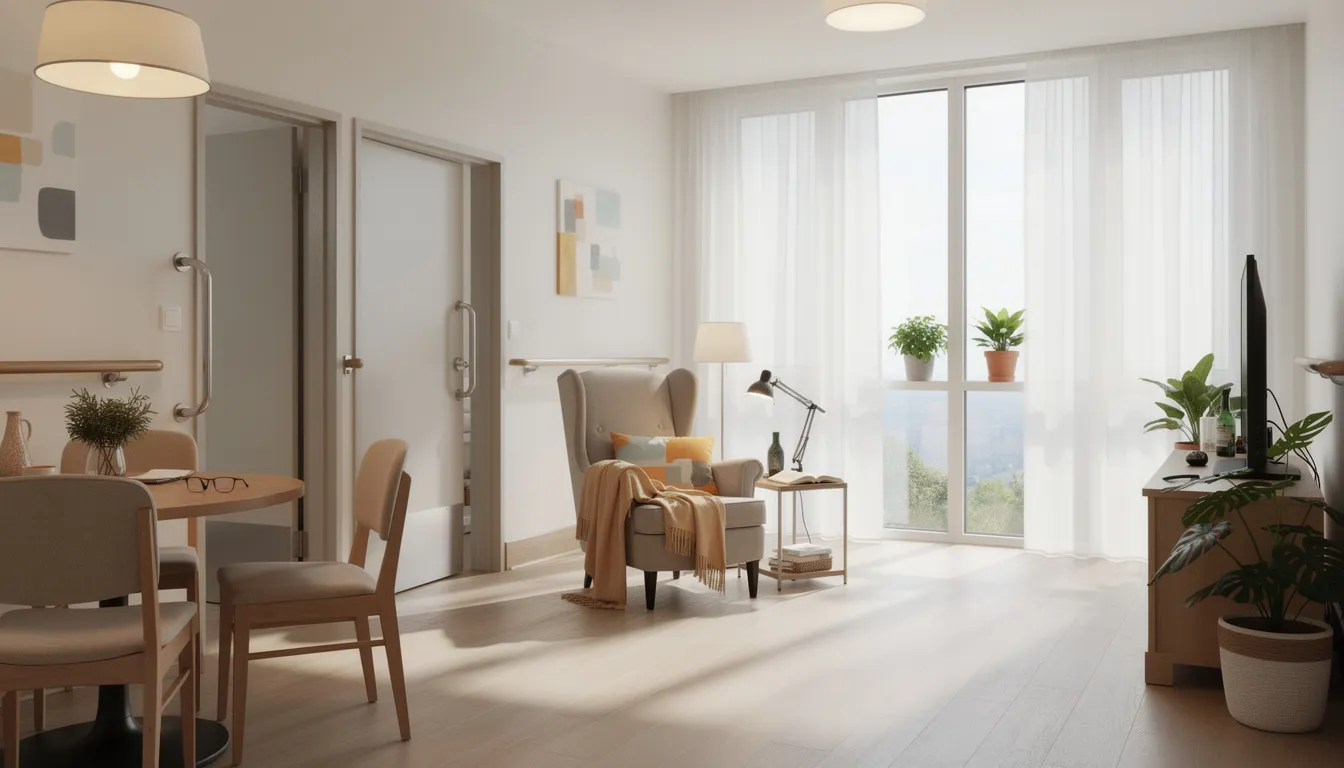

If you’ve started researching housing options for yourself or an aging parent, you’ve probably encountered the term “independent living” dozens of times. It shows up on community brochures, senior living websites, and in conversations with friends who’ve helped their own parents downsize.
But what does independent living actually mean? And how do you know if it’s the right fit?
The answer depends on context. For most seniors, independent living refers to a specific type of housing designed for active older adults who don’t need daily medical care. For people with disabilities, it represents something broader—a philosophy of self determination and civil rights that has shaped policy for decades.
This guide breaks down both meanings, walks you through the practical details of independent living communities, and helps you figure out whether this option makes sense for your situation.
Quick Answer: What Independent Living Means for Seniors
Independent living is a senior housing option designed for older adults—typically 55 and older—who are active, manage their own daily routine, and don’t require hands-on medical or personal care. Residents live in private apartments, cottages, or villas within age-restricted communities that handle maintenance, offer shared amenities, and provide opportunities for social connection.
This is not a nursing home. It’s not assisted living. Residents come and go as they please, make their own decisions, and live independently in every meaningful sense. The community simply removes the burdens of homeownership—lawn care, snow removal, appliance repairs—so residents can spend time on things they actually enjoy.
The typical resident is in their mid-70s, though many communities accept residents starting at 55 or 62. If a resident eventually needs medical care or personal assistance, those services are usually arranged separately through outside providers or by transitioning to a higher level of care.
It’s worth noting that “independent living” sometimes describes seniors who live in their own homes with support from in home care providers, family, or community based services. That’s a valid use of the term. However, this article focuses primarily on purpose-built senior living community options.
The four core ideas behind independent living:
- Privacy in your own residence with your own schedule
- Freedom to make decisions about how you spend your days
- Services that eliminate household chores and maintenance headaches
- Community connections through shared dining, activities, and amenities
Independent Living at Home
Before we dive into senior living communities, let’s address the most common form of independent living: staying in your own home.
Many people first hear “independent living” when discussing how a parent or grandparent can remain safely in a familiar house or condo as they age. This is sometimes called “aging in place,” and for millions of older adults, it’s the preferred option.
Picture a 78-year-old homeowner who’s lived in the same house for 40 years. She handles her own cooking, manages medications, drives to appointments, and spends afternoons reading or gardening. But she’s hired a lawn service because the yard work became too much, and her daughter helps with heavy grocery runs. A cleaning service comes twice a month.
Is she living independently? Absolutely. Independent doesn’t mean doing everything yourself. It means making your own choices about your life and accessing the support you need to maintain that autonomy.
Advantages of independent living at home:
- Familiar surroundings with deep emotional attachment
- Complete control over your schedule and environment
- No community fees or entrance costs
- Freedom to modify your home as needed
Challenges to consider:
- Ongoing home maintenance costs that increase as houses age
- Risk of isolation, especially after losing a spouse or as friends move away
- Safety hazards like stairs, bathtubs without grab bars, or poor lighting
- Limited access to social activities and recreational activities
- Dependence on driving or family for transportation
For many seniors, staying home works well with the right combination of in home care, meal preparation services, and family involvement. Others reach a point where the maintenance burden, loneliness, or safety concerns outweigh the benefits of staying put.

Independent Living in Senior Communities
When people search for “independent living,” they’re usually looking for information about senior living communities—purpose-built campuses where older adults live in private residences with access to shared services and amenities.
These communities are typically age-restricted (55+ or 62+) and designed for residents who can manage daily activities without hands-on help. You get your own apartment, cottage, or villa. You control your schedule. But the community handles the things that make homeownership exhausting: landscaping, building repairs, snow removal, and often housekeeping.
Housing forms vary widely:
- Mid-rise apartment buildings with elevators, common areas on the ground floor, and walking distance to dining
- Garden-style apartments in low-rise buildings arranged around courtyards or green spaces
- Free-standing cottages or villas on landscaped campuses for residents who want more space and privacy
Independent living facilities don’t provide 24/7 medical care or help with activities like bathing, dressing, or toileting. That’s the key distinction from assisted living. If you need that level of support, you’d either hire private caregivers or consider a different care setting.
Financially, most residents sign a lease and pay monthly rent that covers housing, maintenance, and access to amenities. Some communities—particularly continuing care retirement communities—require entrance fees plus monthly fees.
What to expect in a typical independent living community:
- A private home with your own kitchen, bathroom, and living space
- Shared spaces like dining rooms, libraries, fitness centers, and outdoor areas
- Scheduled activities, classes, and social events
- Optional services like housekeeping, dining plans, and transportation
Independent Living in CCRCs (Life Plan Communities)
Continuing care retirement communities (CCRCs)—also called life plan communities—offer something unique: multiple levels of care on a single campus.
Residents typically move in while they’re active and healthy, often in their early to mid-70s. They live in the independent living section, enjoying all the amenities and freedoms that entails. But if health needs change later, they can transition to assisted living communities, memory care, or skilled nursing facilities without leaving the campus.
This continuity appeals to residents who want long-term security. You build relationships with staff and neighbors, and if you need more care eventually, you don’t have to start over somewhere new.
The financial structure is different from rental communities. CCRCs typically require a one-time entrance fee—which can range from tens of thousands to several hundred thousand dollars depending on location, residence size, and contract type—plus ongoing monthly fees. Some contracts refund a portion of the entrance fee to residents or their estates; others are non-refundable but come with lower monthly costs.
Example: A couple, both 72, decides to sell their four-bedroom home and move to a CCRC. They pay a $250,000 entrance fee for a two-bedroom apartment and around $4,500 monthly. They’re not currently using any health services, but they wanted the peace of mind knowing that if either of them develops dementia or needs rehabilitation after a fall, care is available on-site. Their adult children, who live out of state, appreciate knowing their parents won’t need to navigate a crisis move later.
In the independent living section of a CCRC, residents might receive light support—regular housekeeping, optional medication management, wellness checks—but more intensive personal care triggers a move to the assisted living or nursing wing.
Rental Retirement Communities and “Independent Plus” Options
Not everyone wants to commit a large entrance fee. Rental independent living communities offer a more flexible alternative.
These communities function like apartment complexes designed for seniors. You pay monthly rent—no large upfront payment—and that rent typically includes housing, utilities (often most but not all), access to amenities, and some level of services like housekeeping or a meal plan.
Some communities offer what’s called “independent plus” or “independent with services.” This is for residents who are mostly independent but could use a little extra support: scheduled wellness check-ins, medication reminders, or light personal care arranged through on-site staff or third-party providers.
Many rental communities also have licensed assisted living or memory care wings for residents whose needs increase. Unlike many CCRCs, they usually don’t include on-site skilled nursing facilities.
Comparing standard independent living and “independent plus”:
| Feature | Standard Independent Living | Independent Plus |
| Personal care | Not included | Light assistance available |
| Staffing | Daytime management, maintenance | May include trained care staff |
| Check-ins | Emergency call systems | Scheduled wellness visits |
| Pricing | Base monthly fee | Higher monthly fee for services |
| Best for | Fully independent seniors | Those needing occasional support |
Rental communities tend to attract seniors in their late 60s to early 80s who want social engagement, freedom from property maintenance, built-in dining services, and financial flexibility.
Independent Living for People with Disabilities
Here’s where the term “independent living” takes on a different—and older—meaning.
Long before senior housing marketers adopted the phrase, “independent living” emerged from the disability rights movement of the 1960s and 1970s. It represents a philosophy: people with disabilities should live in the community, not institutions, and should have the support they need to make their own decisions about work, relationships, housing, and daily life.
This isn’t about doing everything without help. It’s about self determination—the right to control your own life rather than having choices made for you by doctors, social workers, or institutional policies.
Key frameworks support this philosophy:
- The Americans with Disabilities Act (1990) prohibits discrimination and requires accessible public spaces, employment accommodations, and transportation
- The Olmstead Supreme Court decision (1999) established that unnecessary institutionalization violates civil rights, requiring states to provide community based services when appropriate
Centers for Independent Living (CILs) are the organizational backbone of this movement. These are consumer-controlled, community-based organizations run by and for people with disabilities. There are over 400 federally funded CILs across the United States, providing:
- Skills training for daily activities and employment
- Peer counseling from people with similar lived experiences
- Advocacy for policy changes and individual rights
- Information and referral to community resources
Understanding the shift in perspective:
The traditional “medical model” focuses on curing or fixing impairments—the disability is the problem. The “social model” flips this: the barriers are the problem. Stairs are the problem. Inaccessible websites are the problem. Lack of sign language interpreters is the problem.
From the independent living perspective, ramps, accessible transit, assistive technology, and personal assistance aren’t signs of dependence. They’re tools that enable full participation in society.

Skills, Supports, and Assistive Technology
Independent living services for people with disabilities focus on building adaptive skills and connecting people with the supports they need.
Adaptive skills include:
- Communication (using devices, interpreters, or alternative methods)
- Home management and meal preparation
- Budgeting and financial planning
- Using public transportation or paratransit
- Self-advocacy in medical, employment, and educational settings
Personal assistance services—paid helpers who assist with tasks like dressing, bathing, shopping, or transportation—are central to independent living. These aren’t signs of dependence; they’re tools that enable autonomy. A person who uses a personal assistant to get ready in the morning isn’t less independent than someone who manages alone. They’re simply using available resources to live life on their own terms.
Assistive technology has transformed what’s possible:
- Mobility devices like wheelchairs, scooters, and walkers
- Screen readers and voice recognition software for people with visual or motor impairments
- Smart home devices that control lights, locks, and thermostats via voice commands
- Medication management apps with reminders and tracking
- Communication devices for people with speech differences
In many U.S. states, Medicaid Home and Community-Based Services (HCBS) waiver programs fund in-home support for eligible individuals. These programs allow people who might otherwise require nursing facility care to live in their own apartments with the assistance they need.
Who Is a Good Fit for Independent Living?
The typical independent living residents are older adults who can handle personal care—bathing, dressing, toileting, eating—without daily hands-on help. They don’t need 24/7 medical supervision. They’re looking for a lifestyle change, not a care setting.
Characteristics that suggest a good fit:
- You’re tired of home maintenance—mowing the lawn, cleaning gutters, calling repair people
- You feel isolated in your current home and want more social contact
- You can manage your own medications, with or without simple reminders
- You’d actually use dining rooms, fitness centers, and organized activities
- Your health is relatively stable, without complex medical needs
- You value your independence and want to maintain it while simplifying daily life
Example scenarios:
- An 80-year-old widow who’s physically healthy but lonely after her husband’s death. Her children live across the country. She’s capable but wants community—new friends, shared meals, activities to fill her days.
- A 76-year-old couple who love to travel but dread coming home to a backed-up list of home repairs. They want someone else to handle the maintenance so they can explore without worry.
- A 68-year-old active adult who just retired and sees an opportunity to downsize, reduce expenses, and join a community of peers with similar interests.
Many communities screen prospective residents for cognitive and physical ability at move-in. This isn’t about exclusion—it’s about ensuring residents can live safely with the level of support available. Communities want residents to thrive, which means matching people with appropriate care levels.
When Another Option May Be Better
Independent living isn’t right for everyone. Some seniors need more support than these communities provide.
Assisted living becomes the better choice when someone needs regular help with activities of daily living—bathing, dressing, toileting, transferring, or eating. If your parent needs hands-on assistance with these tasks every day, independent living alone won’t work.
Signs that a higher level of care may be needed:
- Frequent falls or mobility issues requiring physical assistance
- Advanced dementia affecting judgment, safety awareness, or ability to manage daily routine
- Complex medication regimens requiring nursing oversight—not just reminders, but actual administration and monitoring
- Unmanaged chronic conditions that require regular skilled nursing intervention
- Inability to respond appropriately to emergencies (fire, medical crisis)
Independent living communities generally don’t provide extensive medical care. At most, they offer wellness checks, coordinate with visiting health services providers, or host periodic clinics. They’re not equipped for ongoing medical supervision.
When it’s unclear whether independent living is appropriate, consider getting a professional assessment. A geriatrician, primary care clinician, or geriatric care manager can evaluate functional abilities, cognitive status, and safety considerations. This takes the guesswork—and the family arguments—out of the equation.
Services and Amenities in Independent Living Communities
The whole point of independent living communities is removing everyday burdens so residents can spend time on what matters to them: hobbies, relationships, travel, or simply relaxing without a to-do list.
Services are designed around convenience. You shouldn’t have to think about yard work, building repairs, or scrubbing bathrooms. That’s handled. Instead, you can join a book club, take a watercolor class, or spend the afternoon at happy hours with friends you’ve met on campus.

Services and amenities typically fall into three categories:
Daily living support:
- Housekeeping (weekly or bi-weekly cleaning, linen service)
- Laundry facilities or services
- Building and grounds maintenance
- Scheduled transportation to shopping, medical appointments, and local attractions
- Concierge services for booking outings or handling requests
- Emergency call systems in residences
Social and recreational activities:
- Fitness classes, walking groups, and pool exercise programs
- Arts and crafts studios, woodworking shops, and creative programs
- Educational lectures, current events discussions, and book clubs
- Holiday events, themed dinners, and birthday celebrations
- Local excursions to museums, theaters, sporting events, and restaurants
- Volunteer opportunities and intergenerational programs
Campus amenities:
- Dining rooms and casual cafés
- Libraries and computer rooms
- Beauty salons and barbershops
- Fitness centers with equipment designed for older adults
- Swimming pools and spas
- Game rooms, card tables, and billiard rooms
- Chapels, meditation rooms, or spiritual spaces
- Outdoor courtyards, walking paths, and community gardens
Dining and Nutrition
Food is central to community life in most independent living communities.
Residents typically have access to at least one daily meal in a shared dining room, with options ranging from limited meal plans (10-15 meals per month) to three meals daily. Some communities use flexible dining credits that can be applied to main dining, casual cafés, or even guest meals.
The dining room isn’t just about nutrition—it’s a social hub. Residents meet friends for breakfast, celebrate birthdays with table neighbors, and attend themed dinners or holiday buffets. For many seniors, especially those who lived alone previously, shared meals solve the isolation that comes from eating alone three times a day.
Menus typically emphasize balanced nutrition appropriate for older adults, with options for:
- Low-sodium and heart-healthy preparations
- Diabetic-friendly choices
- Vegetarian and other dietary preferences
- Accommodations for common food allergies or restrictions
Important distinction: Unlike assisted living, staff in independent living don’t feed residents or manage specialized medical diets prescribed by physicians. If a resident needs that level of support, it’s typically a sign that a higher level of care is appropriate.
Transportation and Community Life
Many independent living residents have stopped driving—or want to. Transportation services address this without sacrificing freedom.
Common transportation offerings include:
- Scheduled shuttles to grocery stores, pharmacies, and shopping centers
- Weekly trips to local attractions, farmers markets, or cultural venues
- Pre-booked rides to medical appointments within a set radius
- Group outings to restaurants, concerts, or sporting events
This reduces reliance on driving, which matters for older adults who no longer feel comfortable behind the wheel or who’ve given up their license. It also reduces dependence on family members for every errand.
Organized programming keeps residents connected to the broader community and each other:
- Weekly: Bus to the farmers market from April through October
- Monthly: Trip to the local symphony, museum exhibit, or minor league baseball game
- Ongoing: Volunteer opportunities at food banks, schools, or community organizations
- Daily: Fitness classes, card games, coffee gatherings, and informal socializing
These activities aren’t just entertainment. Research consistently shows that social connection reduces loneliness, supports cognitive function, and improves overall health outcomes for older adults.
Independent Living vs. Assisted Living
Both independent living and assisted living serve older adults in community settings. Both offer housing, meals, activities, and support. But they differ in fundamental ways—and understanding those differences helps you choose the right option.
The core distinction: independent living is lifestyle-oriented, while assisted living adds hands-on care.
Independent living provides convenience services—housekeeping, maintenance, dining, activities—that make life easier. Residents manage their own personal care, medications, and health care services.
Assisted living includes everything in independent living plus direct help with activities of daily living: bathing, dressing, toileting, transferring, and sometimes eating. Staff are trained to provide this support, and nursing oversight is typically available for medication management and health monitoring.
Key differences at a glance:
- Personal care: Not provided in independent living; included in assisted living
- Medication help: Reminders only (if available) in independent living; administration and monitoring in assisted living
- Staffing: Daytime management in independent living; 24/7 trained caregivers in assisted living
- Nursing: Not on-site in most independent living; licensed nurses typically on-site or on-call in assisted living
- Meals: Usually one meal included in independent living; three meals daily in assisted living
Cost and Payment Differences
Independent living residents typically pay monthly rent or, in CCRCs, an entrance fee plus a monthly fee. This covers:
- Housing and utilities (often most but not all)
- Basic meal plan (often one meal daily or a set number monthly)
- Housekeeping and linen service
- Building and grounds maintenance
- Access to amenities and activities
- Scheduled transportation
Assisted living monthly fees are significantly higher because they include:
- Personal care assistance (help with ADLs)
- Three daily meals plus snacks
- Medication management
- 24/7 staffing and supervision
- More intensive health monitoring
As a general benchmark, independent living costs can run approximately 30-50% less per month than assisted living in the same geographic market. However, costs vary enormously by region and amenity level.
Payment sources:
Neither Medicare nor Medicaid covers room and board in independent living or assisted living. Most residents pay out of pocket using:
- Retirement savings and investment income
- Proceeds from selling a home
- Pension payments
- Social Security income
Long-term care insurance may help cover care costs in assisted living but typically doesn’t apply to independent living, which isn’t considered a care setting. Some state Medicaid waiver programs cover care services in assisted living for eligible low-income residents.
Medical and Supportive Care
Independent living communities are not health care providers. They’re housing communities with services.
What you might find in independent living:
- Periodic wellness clinics (blood pressure checks, flu shots)
- Emergency call systems in each residence
- Priority access to on-site rehabilitation or clinics (in some CCRCs)
- Coordination with outside home health agencies or private caregivers
What you won’t find:
- On-site physicians managing chronic conditions
- Staff administering medications or injections
- Skilled nursing care for complex medical needs
- 24/7 health monitoring
Example: A resident in independent living falls and breaks her wrist. She calls 911, goes to the hospital, and returns to her apartment. The community might check on her, but she’s responsible for arranging follow-up care, physical therapy, and any help she needs during recovery. If she needs hands-on help with bathing while her arm heals, she’d hire a private caregiver or ask family members to assist.
Contrast with assisted living: A resident in assisted living falls. Staff respond immediately, assess the situation, and coordinate emergency care. After she returns, nurses monitor her recovery, adjust medications if needed, and care staff help with bathing and dressing until she’s fully mobile again.
Community Design and Family Involvement
Physical layout differs between independent and assisted living.
Independent living communities often feature:
- Spread-out campuses with multiple buildings
- Walking paths, outdoor spaces, and gardens
- Separate cottages or villas for residents who want more privacy
- Distances between residences and common areas that assume residents can walk comfortably
Assisted living communities are typically:
- More compact, with shorter distances between rooms and common areas
- Designed so staff can respond quickly to calls for help
- Configured with dining, activities, and nursing stations centrally located
- Built with wider hallways, handrails, and accessible bathrooms throughout
Family involvement also differs:
In independent living, family members are welcome to visit, join activities, and participate in community events. But residents make their own decisions about daily life, finances, and health care. Family involvement is optional and resident-directed.
In assisted living, families are more actively involved in care planning. They receive regular updates on health changes, participate in care conferences, and often help coordinate medical appointments and treatment decisions. This is especially true in memory care, a specialized form of assisted living for residents with dementia that adds secure layouts, visual cues, and closer supervision.
Costs, Budgeting, and Financial Assistance
Let’s talk money.
Independent living costs vary enormously based on location, housing type, and amenity level. A modest senior apartment in a rural Midwestern market might start at $1,500-2,000 per month. A high-end community in a major coastal city could run $5,000-8,000 monthly or more. CCRCs with entrance fees add another layer of complexity.
What your monthly fee typically covers:
- Base rent for your residence
- Utilities (often heat, water, electric, and trash; cable and internet may be extra)
- Meal plan (one meal daily is common; additional meals cost more)
- Basic housekeeping and linen service
- Building maintenance and grounds keeping
- Access to amenities and scheduled activities
- Scheduled transportation
What usually costs extra:
- Additional meals beyond your base plan
- Guest meals
- Premium parking or garage spaces
- Pet fees (one-time and monthly)
- Cable television and internet (in some communities)
- Enhanced housekeeping frequency
- Personal services like salon appointments or private transportation
Easily overlooked expenses:
- Move-in fees and application fees
- Renter’s insurance (often required)
- Personal health insurance premiums (Medicare, supplemental, prescription plans)
- Medical care, prescriptions, and copays (not included in community fees)
- Personal items, clothing, and spending money
Before choosing a community, compare what’s included. A community with a higher monthly fee might actually cost less overall if it includes more meals, utilities, and services than a cheaper competitor.
Financial Assistance and Subsidized Options
Most independent living communities are paid out of pocket. Unlike nursing homes and some assisted living situations, there aren’t many public programs that cover independent living rent.
Potential resources to explore:
HUD-subsidized senior housing: The Department of Housing and Urban Development funds age-restricted affordable housing for qualifying low-income seniors. Residents typically pay a percentage of their income (often 30%) for rent. These communities have income limits for eligibility and often maintain waiting lists that can stretch months or years.
Area Agencies on Aging: These local organizations, funded through the federal Administration for Community Living, connect seniors with community based services like:
- Congregate meal programs at senior centers
- Home-delivered meals (Meals on Wheels)
- Transportation assistance
- Senior center activities and programs
Veterans’ benefits: VA programs may help eligible veterans with housing, health care, and aid and attendance benefits that could supplement independent living costs.
State and local programs: Some states and municipalities operate affordable senior housing programs or offer property tax relief that helps seniors remain in their homes.
Nonprofit organizations: Some religious organizations, civic groups, and senior-focused nonprofits operate affordable senior housing or offer financial assistance programs.
Don’t wait until you need housing to explore these options. Waiting lists are common, and applying early gives you more choices.
How to Decide if Independent Living Is Right for You
Choosing senior living options isn’t just about today—it’s about the next 5-10 years.
Consider your current situation, but also think about trends. How is your health changing? What does your social support network look like? Can you afford the monthly fee now and for the foreseeable future? What happens if your needs increase?
Questions to ask yourself (or a loved one):
- Can I manage bathing, dressing, toileting, and eating independently?
- Am I exhausted by home maintenance, or do I still enjoy it?
- Do I feel isolated where I live now? Would I participate in activities if they were available?
- Would I use on-site dining, fitness centers, and transportation?
- How stable is my health? What conditions might change my care needs?
- Can I afford the monthly cost without depleting savings too quickly?
- What’s my backup plan if I need more care later?
Before deciding:
- Visit multiple communities in your area. The brochure is not the reality.
- Attend a meal and observe the dining room. Is it lively or subdued? Do residents seem engaged?
- Participate in an activity to get a feel for the social environment.
- Talk with current residents—not just staff. Ask what they like and what they’d change.
- Review contracts carefully. Understand what’s included, what costs extra, and what happens if you need to leave.
Coordinate with professionals:
- A financial planner can help you compare the long-term cost of community living versus staying home with in-home care.
- An elder law attorney can review contracts and explain your rights.
- A geriatric care manager or social worker can assess care needs and help identify appropriate options.
There’s no single “right” path. Some people thrive in independent living communities, making new friends and discovering interests they never had time for during working years. Others prefer to age in place at home, surrounded by familiar belongings and neighborhood connections. Still others find that assisted living or a CCRC provides the security they need.
Independent living is one tool among many for creating a safe, fulfilling, and self-directed life in later years. The goal isn’t to find the perfect option—it’s to find the option that fits your life right now, with flexibility for what comes next.
Start by visiting communities, asking specific questions, and being honest about what you want your days to look like. The right choice will become clearer once you see the options in person.